YRITTÄJÄ, tule mukaan omiesi pariin! Liity Yrittäjiin.
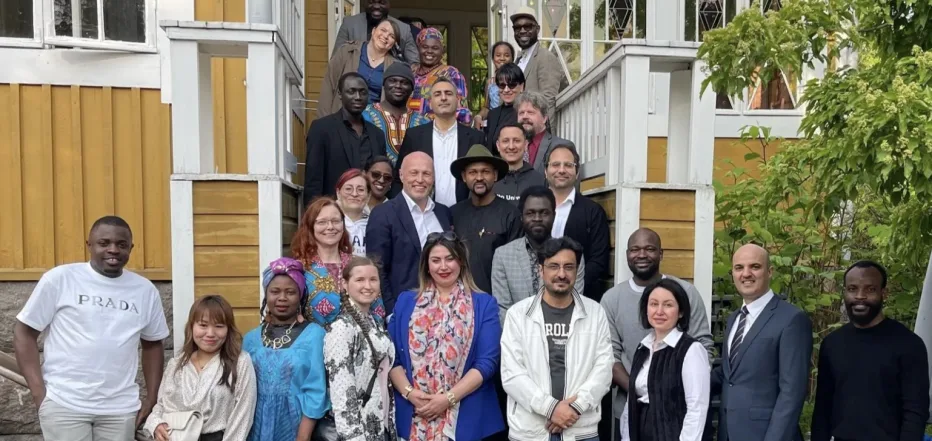
Inclusive Internationalisation in Finland: Why We Must Build It Together with Migrant Entrepreneurs
Finland’s future as an innovative, resilient, and competitive society depends increasingly on how well we succeed in inclusive internationalisation. This is not only a question of export, growth, or talent attraction. It is a question of participation: who gets to build Finland’s entrepreneurial future, and on what terms.
Internationalisation is often discussed in terms of markets, languages, and global connections. However, these alone are not enough. Meaningful internationalisation only emerges when people with diverse backgrounds can participate fully, feel a sense of belonging, and influence how entrepreneurial communities evolve. This is why inclusion is not a separate agenda; it is the foundation of sustainable internationalisation.
Across Finland, we are learning that internationalisation cannot be “delivered” to migrant entrepreneurs. It must be built with them, side by side, through trust, shared learning, and genuine partnership.
What does inclusive internationalisation require?
Inclusive internationalisation requires openness, flexibility, and the courage to question established practices. It means recognising that many structures within Finnish entrepreneurship ecosystems have been designed for a relatively homogeneous group, and that these structures can unintentionally exclude.
In practice, this has meant lowering participation barriers through multilingual communication, translating materials when needed, and openly discussing when and how language, culture, or institutional norms may limit access. Communication, marketing, and events increasingly need to reflect the linguistic and cultural diversity that already exists in Finland.
However, inclusion goes far beyond language. It is about power, representation, and shared ownership. When people with lived experience of migration and international entrepreneurship are present in decision-making roles, the conversation changes. Governance becomes richer, blind spots are reduced, and the realities faced by diverse entrepreneurs become visible rather than abstract.
Active participation by migrant entrepreneurs, not only as attendees but as co-creators, is essential. When international entrepreneurs help design activities, choose themes, and shape priorities, internationalisation becomes a lived process rather than a policy goal.
From events to trust: practical work and mutual learning
Inclusive internationalisation is built through action, not declarations. Across Finland, trust has grown through concrete encounters such as:
- Informal networking meetings that prioritise human connection
- Expert seminars addressing the everyday realities of entrepreneurship in Finland
- Events where migrant entrepreneurs themselves take the lead and share their experiences
In these spaces, listening has been just as important as speaking. Understanding different entrepreneurial cultures, expectations, and risk perceptions requires time and humility. Perhaps most importantly, these encounters create environments where entrepreneurs from diverse backgrounds feel safe asking questions, sharing their uncertainty, and learning from one another.
A critical aspect of this work is reaching those who are not yet part of formal entrepreneurial networks. Many migrant entrepreneurs operate outside established structures, not because of a lack of interest, but because the entry thresholds feel unclear or unwelcoming. Inclusive internationalisation actively lowers these thresholds and makes visible that entrepreneurial organisations in Finland are also meant for them.
A shared national responsibility
Inclusive internationalisation is not the responsibility of individual cities or organisations alone. It is a national task that requires alignment between local actors, cities, business organisations, and national strategies. Collaboration strengthens everyone involved, and fragmentation weakens impact.
When migrant entrepreneurs are recognised not only as beneficiaries but as contributors to Finland’s economic and social development, internationalisation becomes a shared project. Learning, dialogue, and trust-building across communities are not side activities — they are the core work.
A shared investment in Finland’s future
Inclusive internationalisation is built through people and sustained through commitment. It takes those who participate, those who organise, and those who are willing to step beyond familiar structures to create something together. Every shared experience, conversation, and collaboration strengthens Finland’s entrepreneurial ecosystem in ways that no single organisation or initiative could achieve alone.
By developing internationalisation alongside migrant entrepreneurs, Finland is investing in more than just global connections. It is investing in resilience, innovation, and a more inclusive society, foundations that will shape the country’s economic and social future for years to come.
Esa Kinnunen
CEO, Espoo Entrepreneurs
Mehdi Yarmohammadi
Board Member, Espoo Entrepreneurs
Berit Virtanen-Thewlis
Board Member, Espoo Entrepreneurs
Committee on Immigrant Entrepreneurs, Finnish Entrepreneurs